Two Forests in One Afternoon
Kelly Butte and the White River, Washington Cascades
August 30, 2026
We began at 4,310 feet in a forest that already felt high and cool. Black cottonwood lingered near the road, but almost immediately the trail belonged to conifers: Pacific silver fir, western hemlock, and Douglas-fir. Bracken and thimbleberry filled the openings, and the pale undersides of silver-fir needles flashed whenever I lifted a branch. The trees were not yet the wind-shaped figures of the summit, but the lowland forest was already behind us.
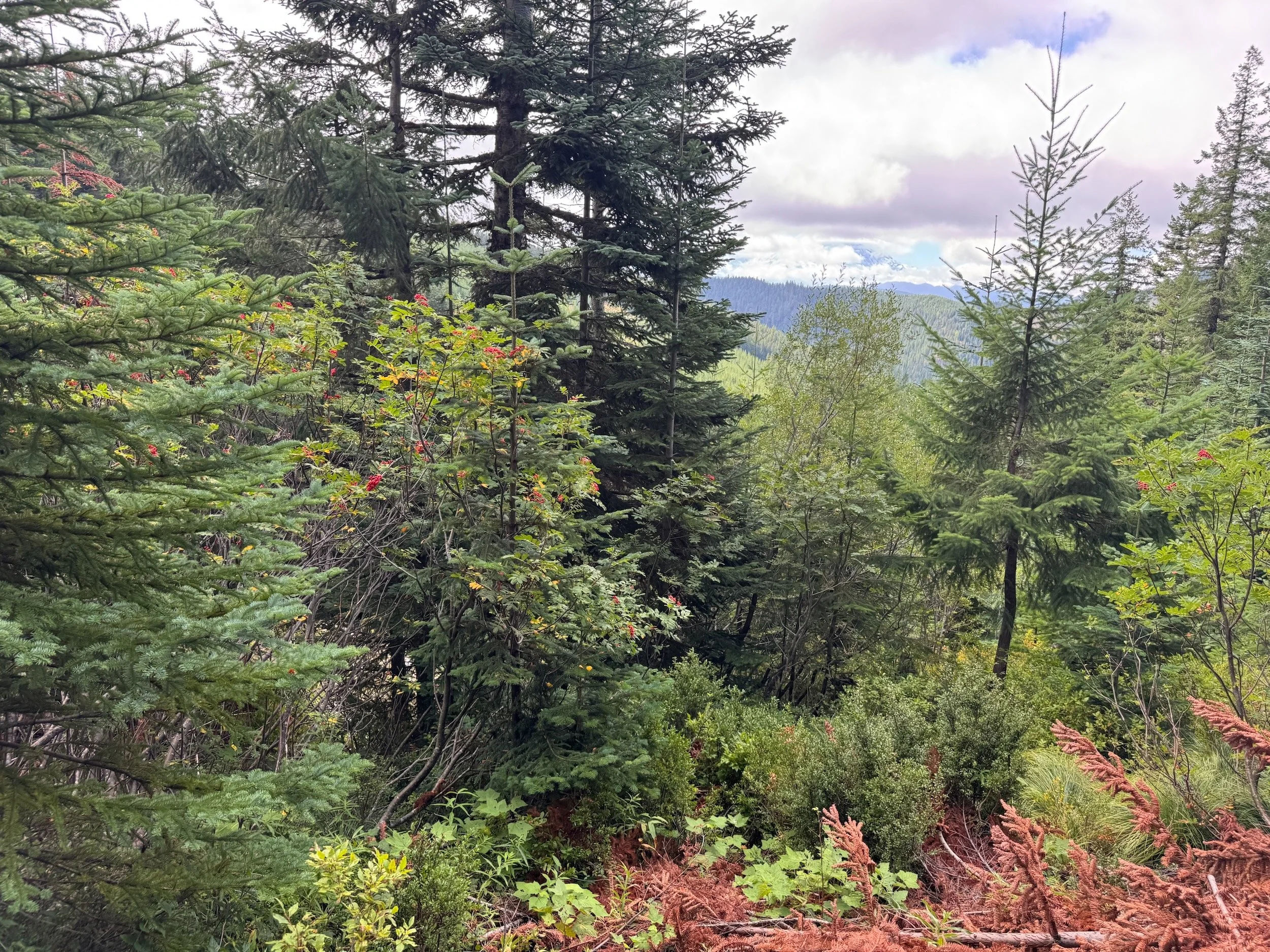
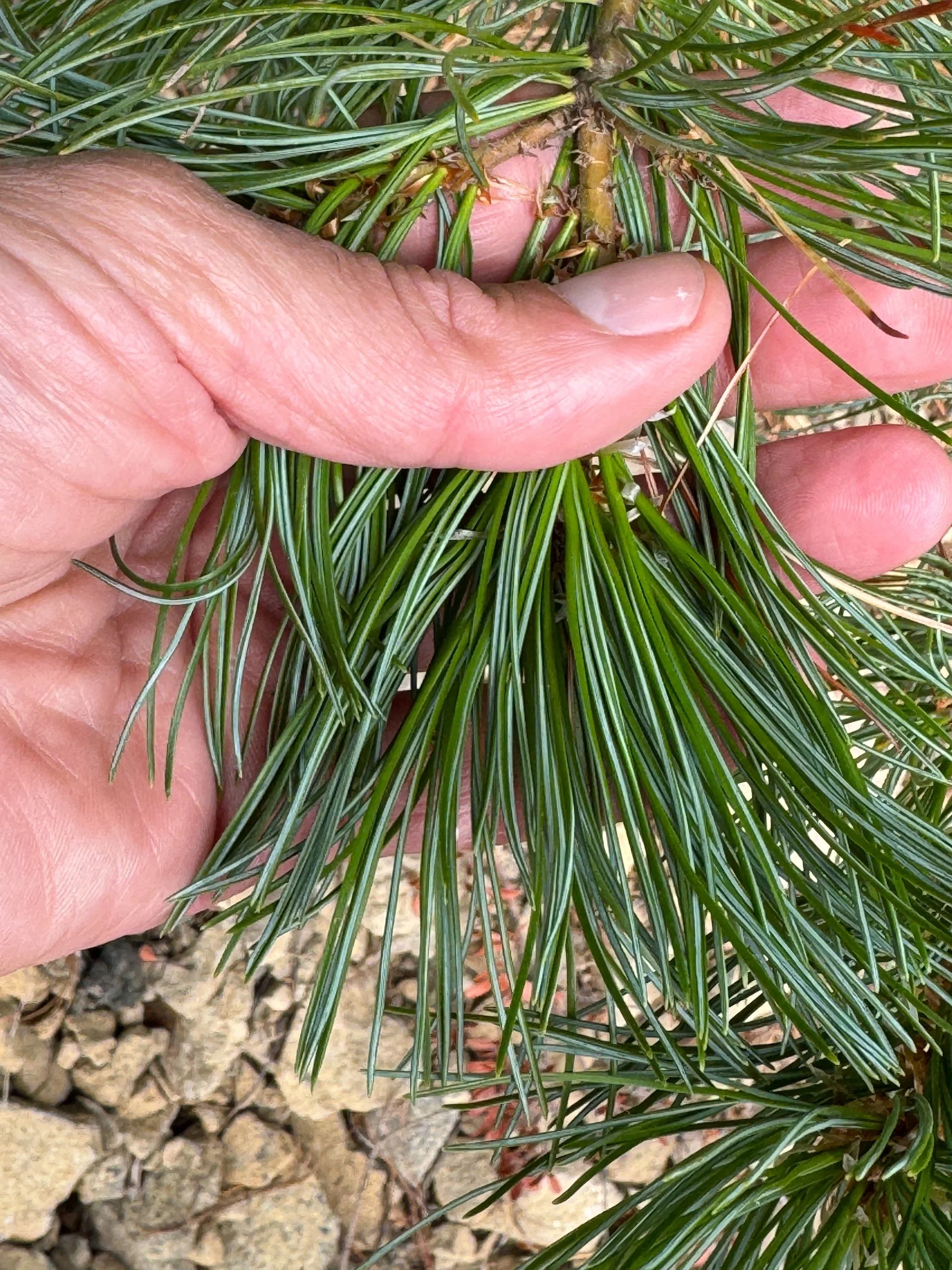
At about 4,425 feet I found the tree that would follow us almost all the way up: western white pine, Pinus monticola. Young trees stood blue-green against the darker Douglas-firs. A needle bundle settled the matter—five slender needles, all arising from one fascicle. Later there would be long hanging cones and older trees with open, irregular crowns, but this first small pine gave the climb its botanical thread.
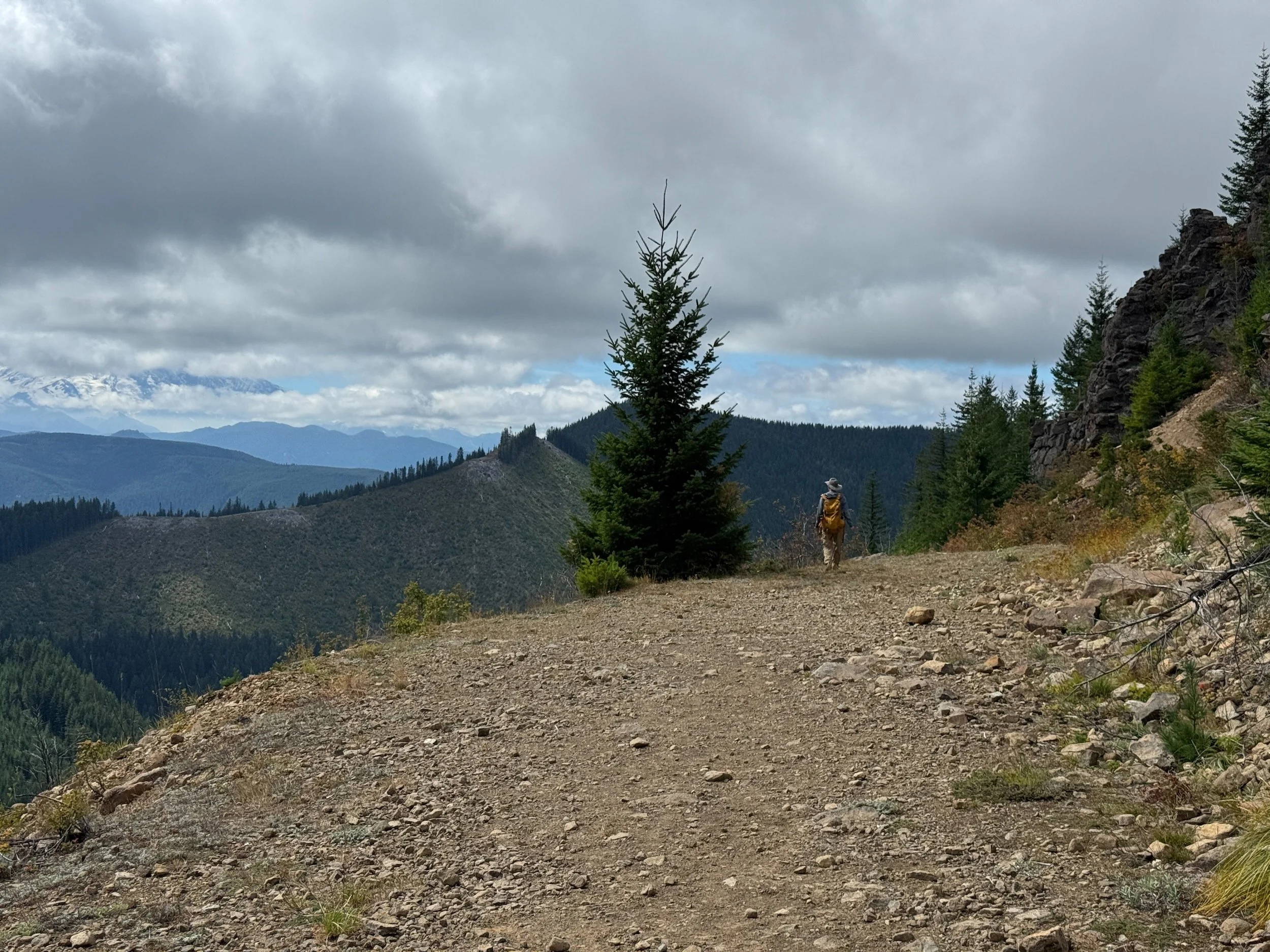
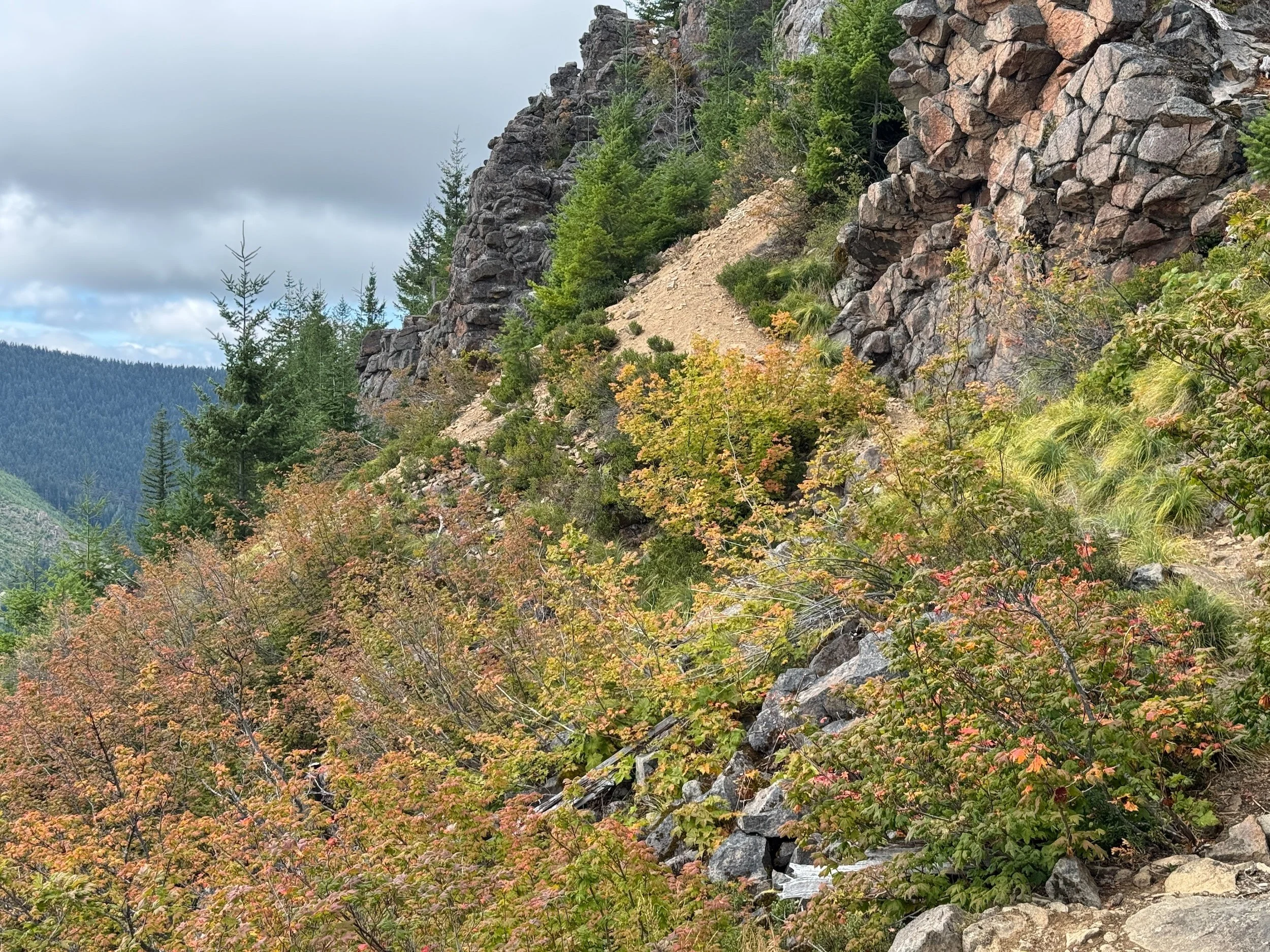
The road soon widened onto a ledge. Strawberries crept across the mineral soil, oceanspray and berry shrubs occupied cracks in the rock, and vine maple had begun to show the first warm edge of autumn. Mount Rainier appeared and disappeared under moving cloud. The ledge felt exposed after the enclosed forest, yet it held a dense little community adapted to shallow soil, sun, and wind.
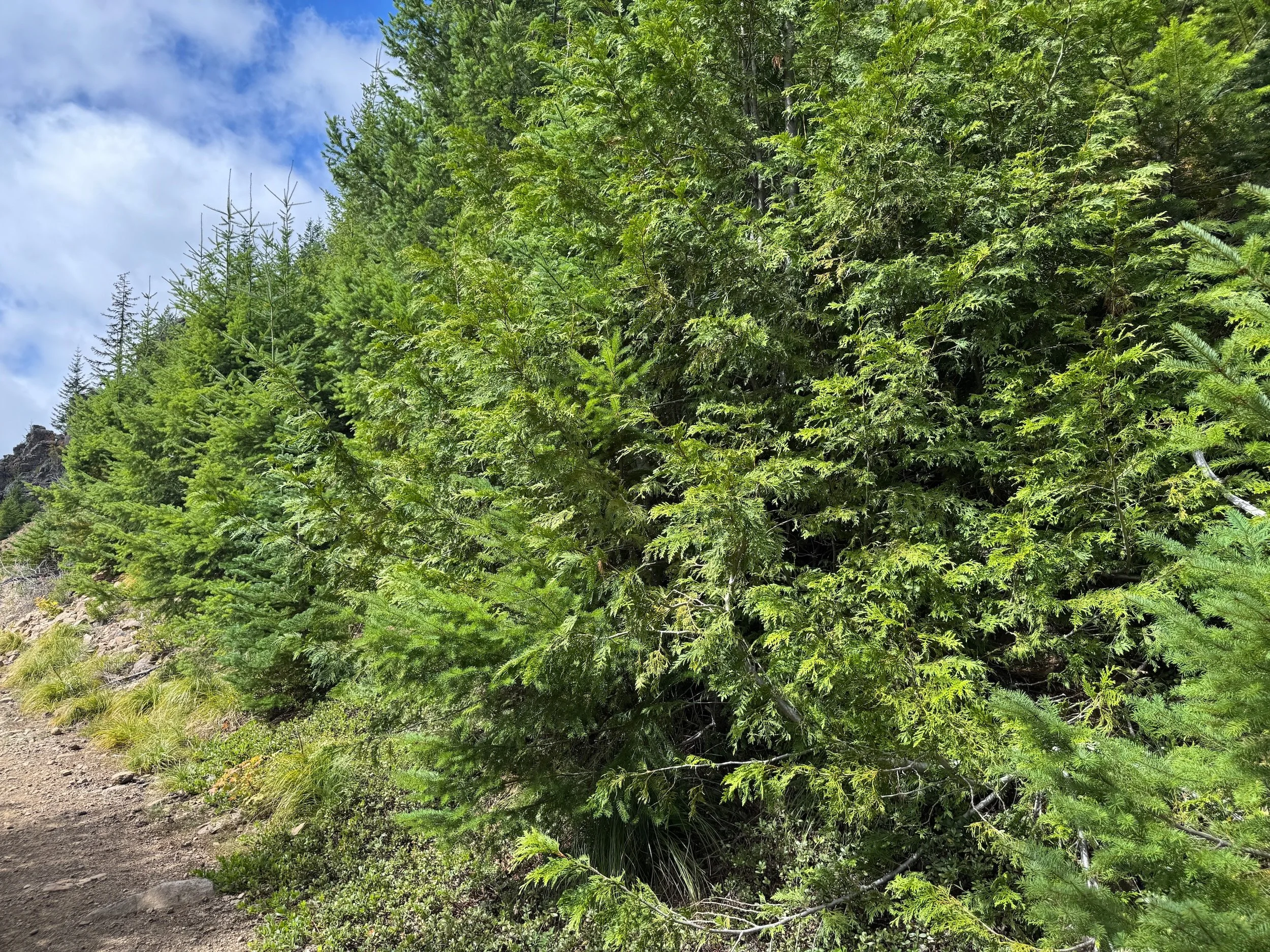
The next decisive arrival was Alaska yellow-cedar, Callitropsis nootkatensis. Its drooping sprays appeared beside the trail around 4,700 feet, marking a change in the company of trees. Yellow-cedar thrives in cool, wet mountain climates; here it stood where the forest began to loosen and the ledges multiplied.
Near the lookout ledge, one small pine stopped me. It was shorter, less blue, and less lush than the western white pines I had been seeing below. In that exposed setting, beside the trees I think of as the high-alpine quartet, I mistook it for a whitebark pine.
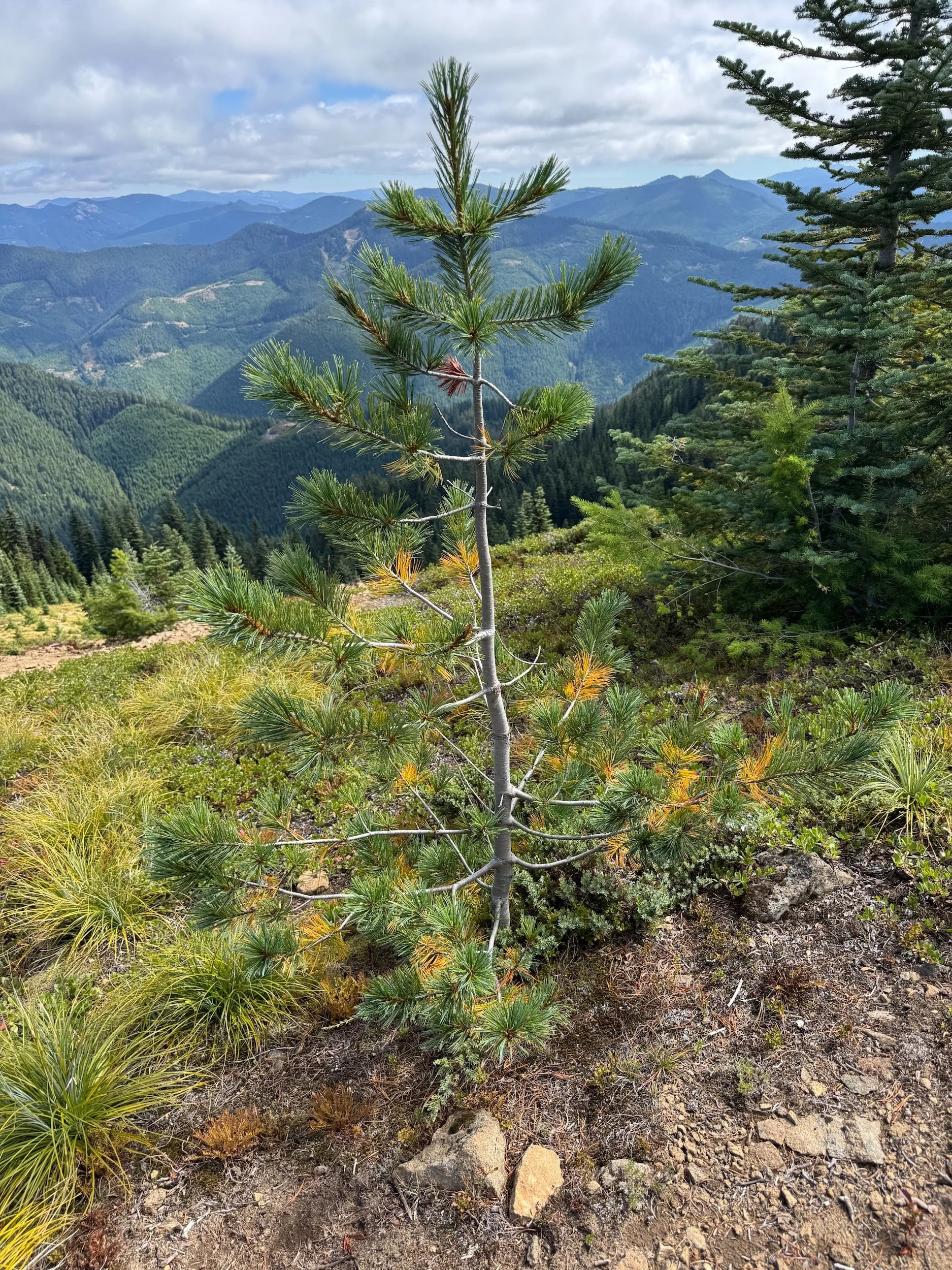
The photographs corrected me. The needles were long and slender in bundles of five, the branching was open and whorled, and foliage continued along the shoots: western white pine again, wearing a high-elevation form. That correction made the day’s pattern more vivid. I had known the species was here, but I had never noticed how abundant it was—or how nearly it spanned the trail from bottom to top.
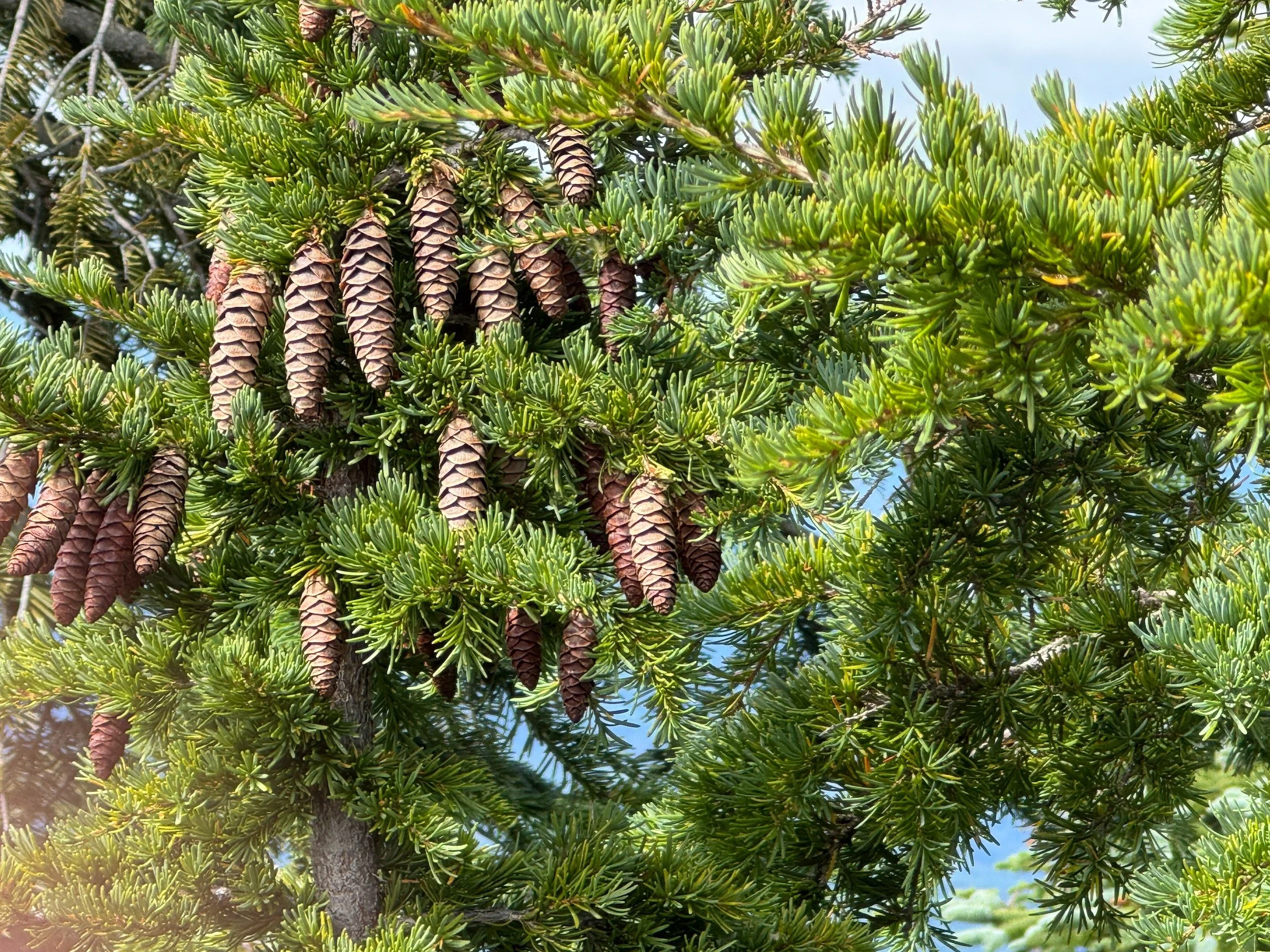
Around it, the forest resolved into a high-Cascade quartet: western white pine, Alaska yellow-cedar, mountain hemlock, and subalpine fir. Mountain hemlock carried small pendant cones among needles arranged around the twig. Subalpine firs rose in narrow spires, a form well suited to shedding mountain snow. The pine that fooled me was not an exception to the day’s story. It was its clearest expression.
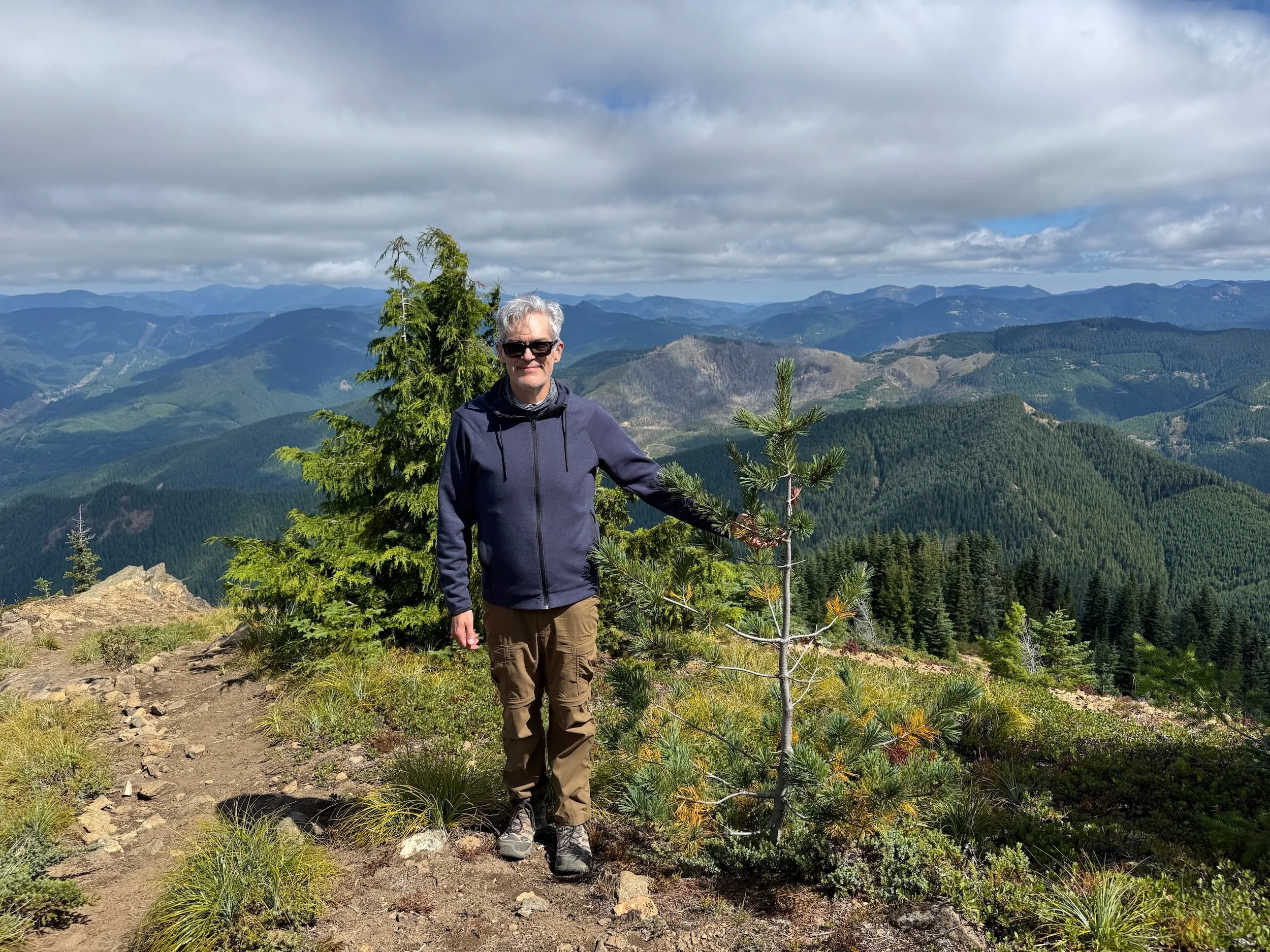
The lookout stood at roughly 5,400 feet. Rainier wore a cap of cloud, the surrounding ridges receded blue into the distance, and clearcuts made the managed forest legible on some slopes. A developed area lay far off in the right direction for Seattle, though we never confirmed that it was the city. My regular trail companion and I ate lunch just below the top among the same trees I had been naming on the way up. The summit mattered, but what made it coherent was the sequence that had brought us there.
The berry meadows were already turning. Blueberry and huckleberry foliage glowed red among the firs while fireweed held a few late flowers. We did not try to take the berry shrubs to species on this trip. These early colors did not feel like the end of summer so much as the mountain’s advance notice: at this elevation, autumn begins negotiating before the calendar admits it.
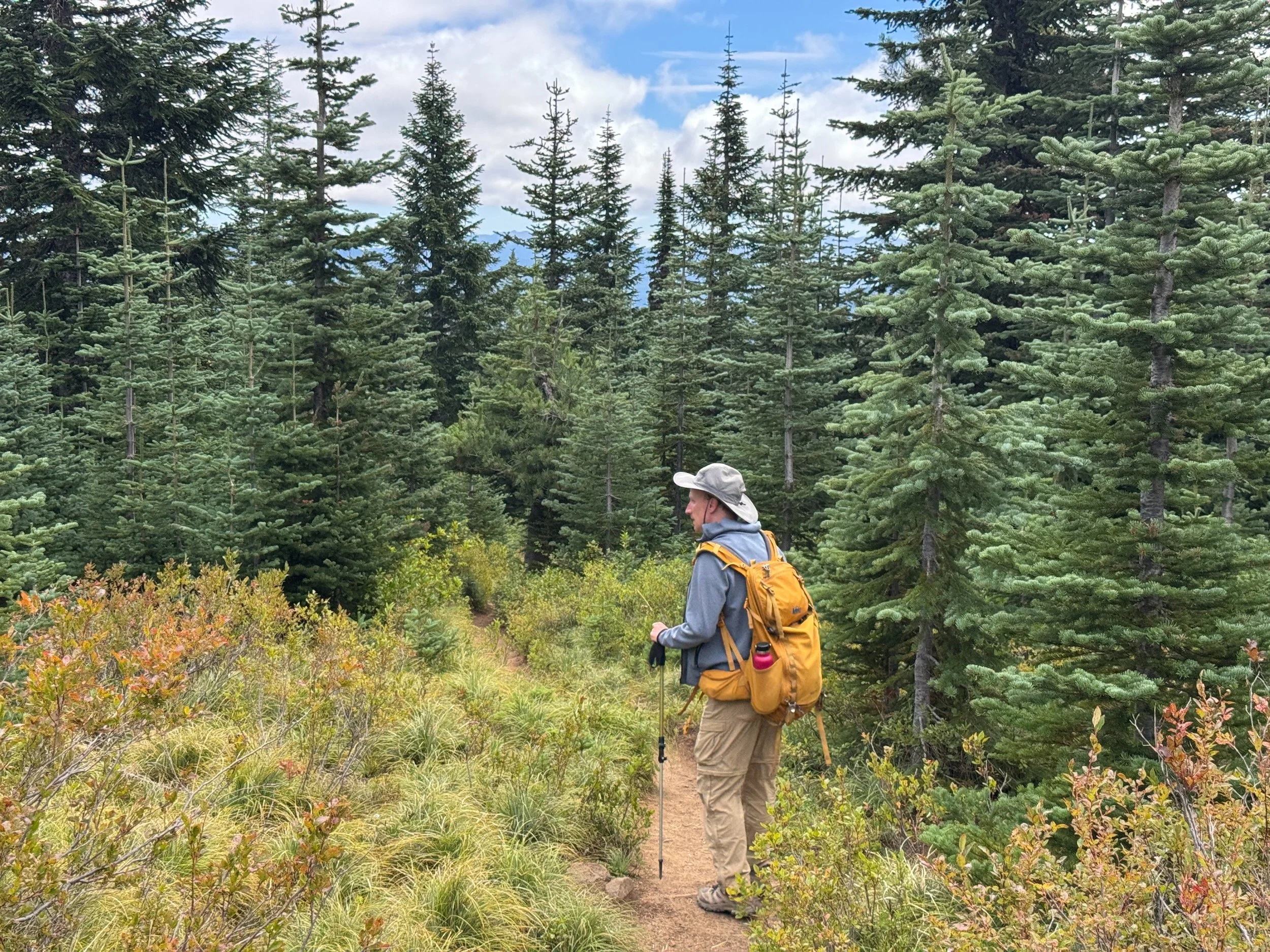
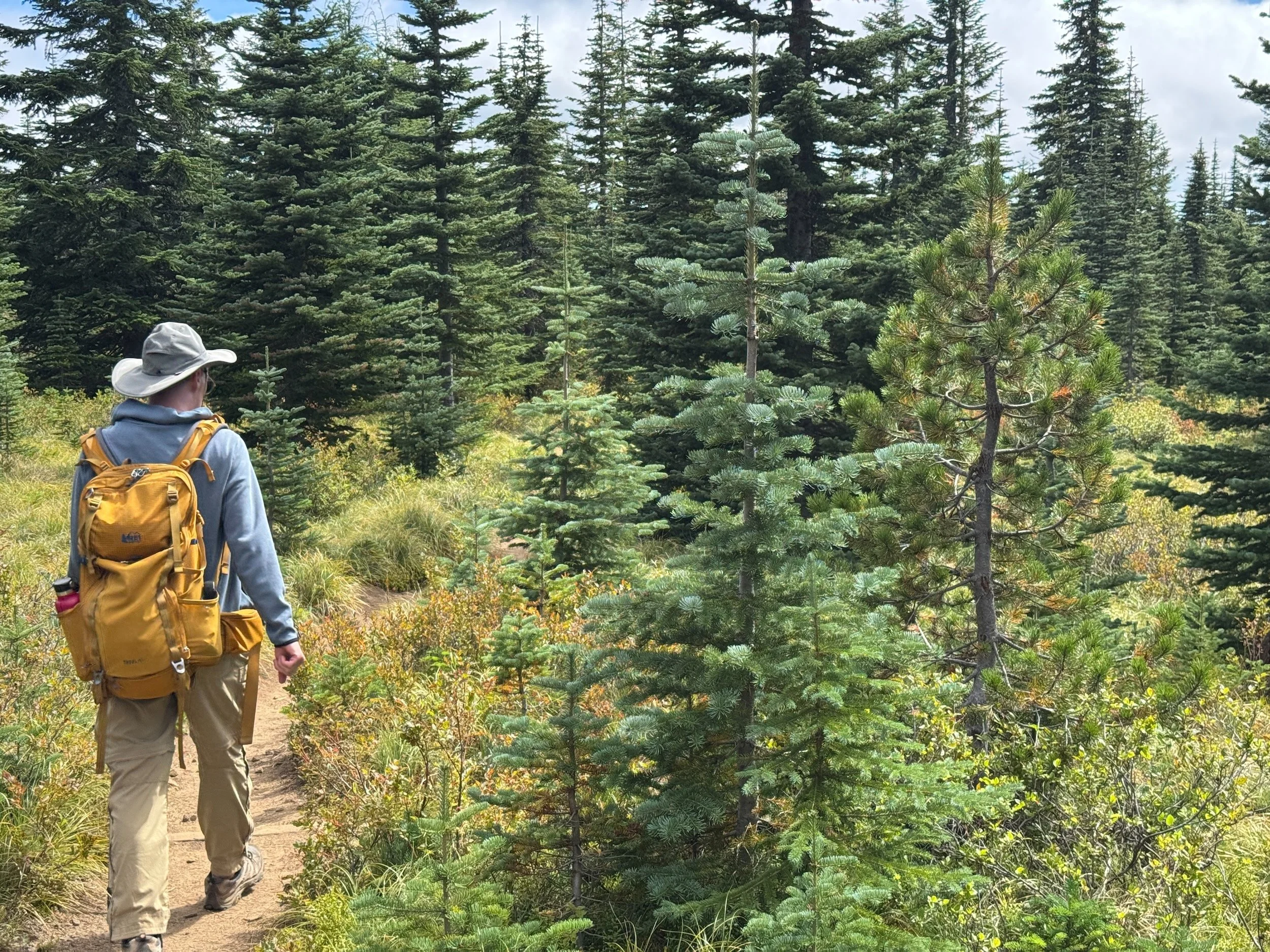
On the descent, a second pine interrupted the five-needle pattern. Its needles came in pairs, and a small cone clung to the branch: lodgepole pine, Pinus contorta. For a stretch it grew in the same open upper forest as western white pine, subalpine fir, and mountain hemlock. The comparison was immediate and physical—two needles against five, compact cone against the long pendants of white pine.
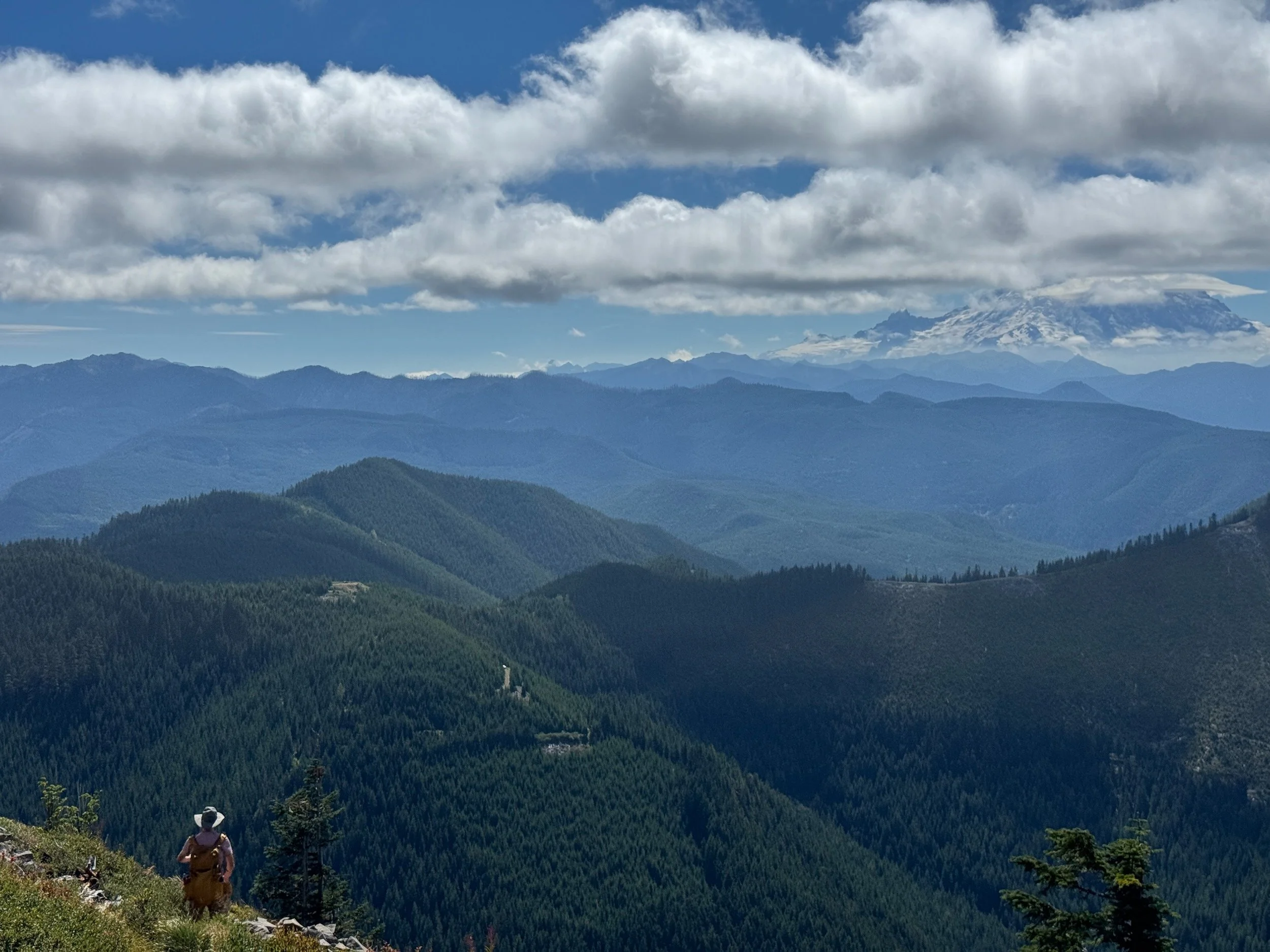
The mountain opened repeatedly as we descended. Rainier remained cloud-wrapped but unmistakable, appearing between conifer silhouettes and above the rocky slopes. From one broad view my regular trail companion became a small figure at the edge of the frame, exactly the right scale for the landscape.
By the ledges, vine maple and berry shrubs made bright patches against the dark forest. Below them, Pacific silver fir reappeared. The return of familiar lower-elevation trees made the descent feel like running the day’s sequence backward—except that the white pines kept refusing a narrow band, appearing from the lower trail nearly to the summit.
We could have ended at the trailhead, but a stop along the White River changed the shape of the outing. At 1,628 feet the forest was suddenly crowded with lowland abundance: western redcedar, grand fir, western hemlock, Douglas-fir, black cottonwood, red alder, bigleaf maple, and vine maple. Grand fir needles lay in glossy, flattened ranks, their upper surfaces making the two-ranked arrangement easy to see.
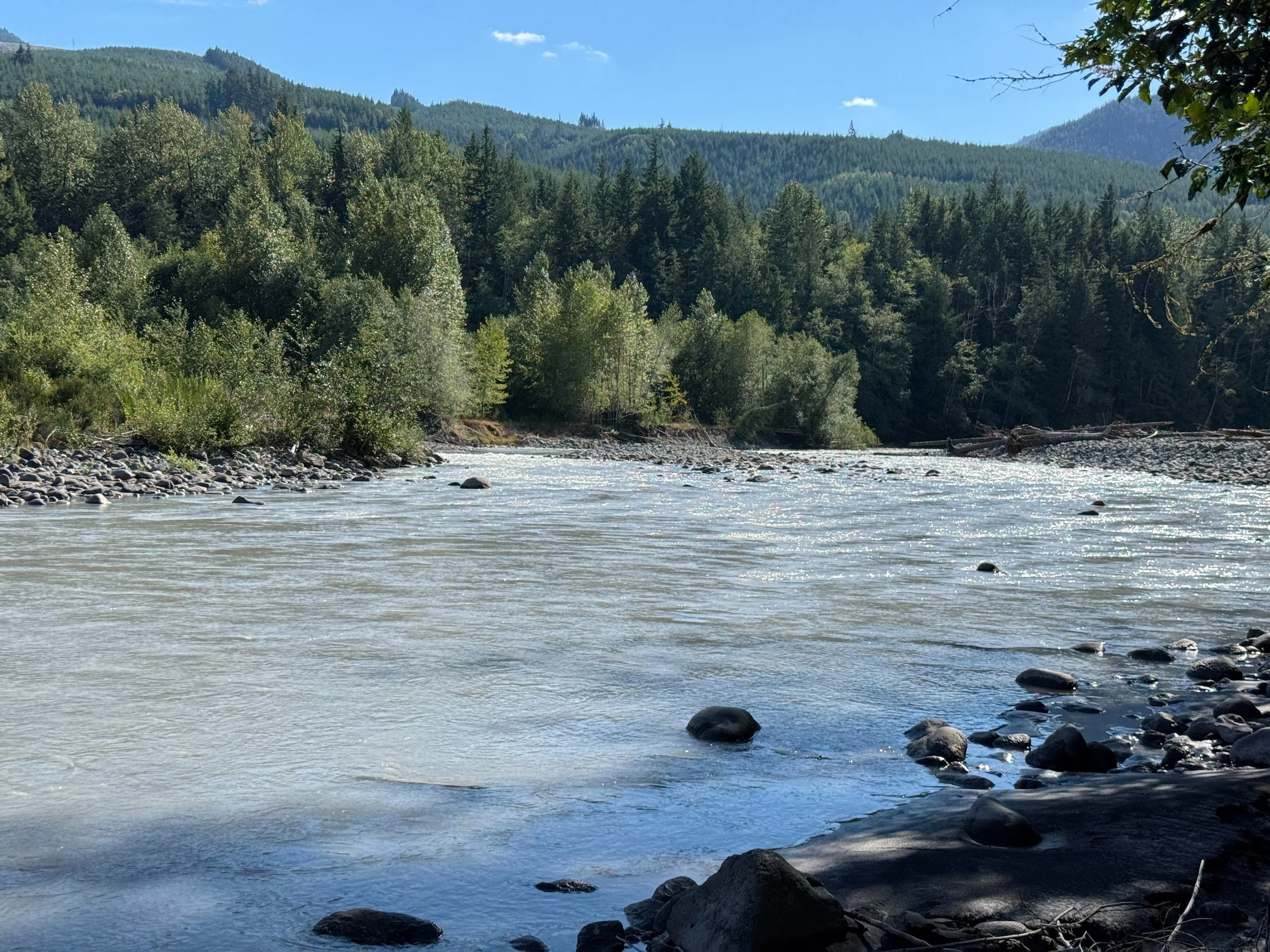
The river itself was milky with glacial sediment, broad and restless among cobbles and driftwood. Cottonwoods and alders occupied the floodplain, trees built for disturbance and renewal. After the dry ledges and narrow summit firs, the river corridor felt almost extravagant.
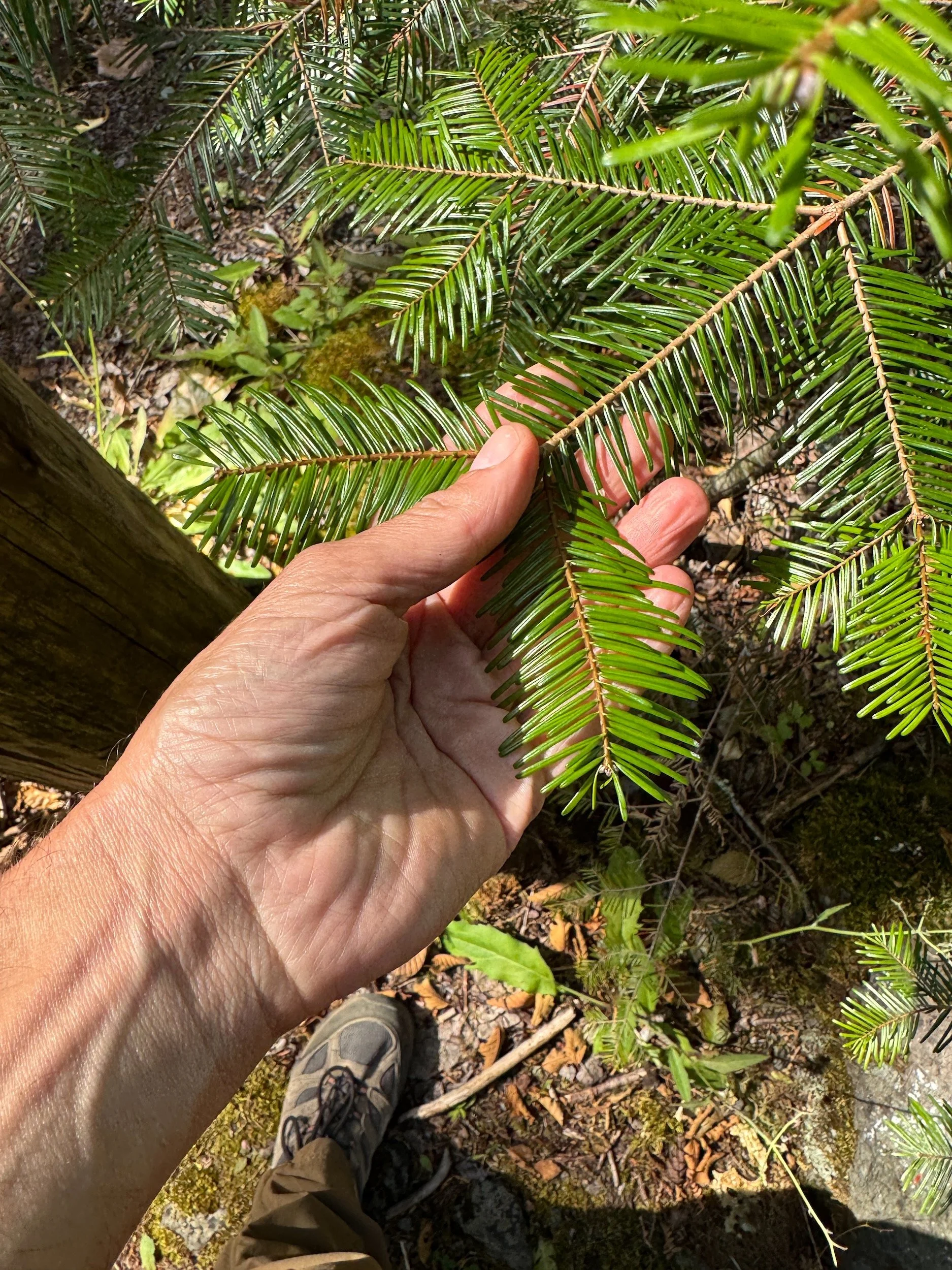
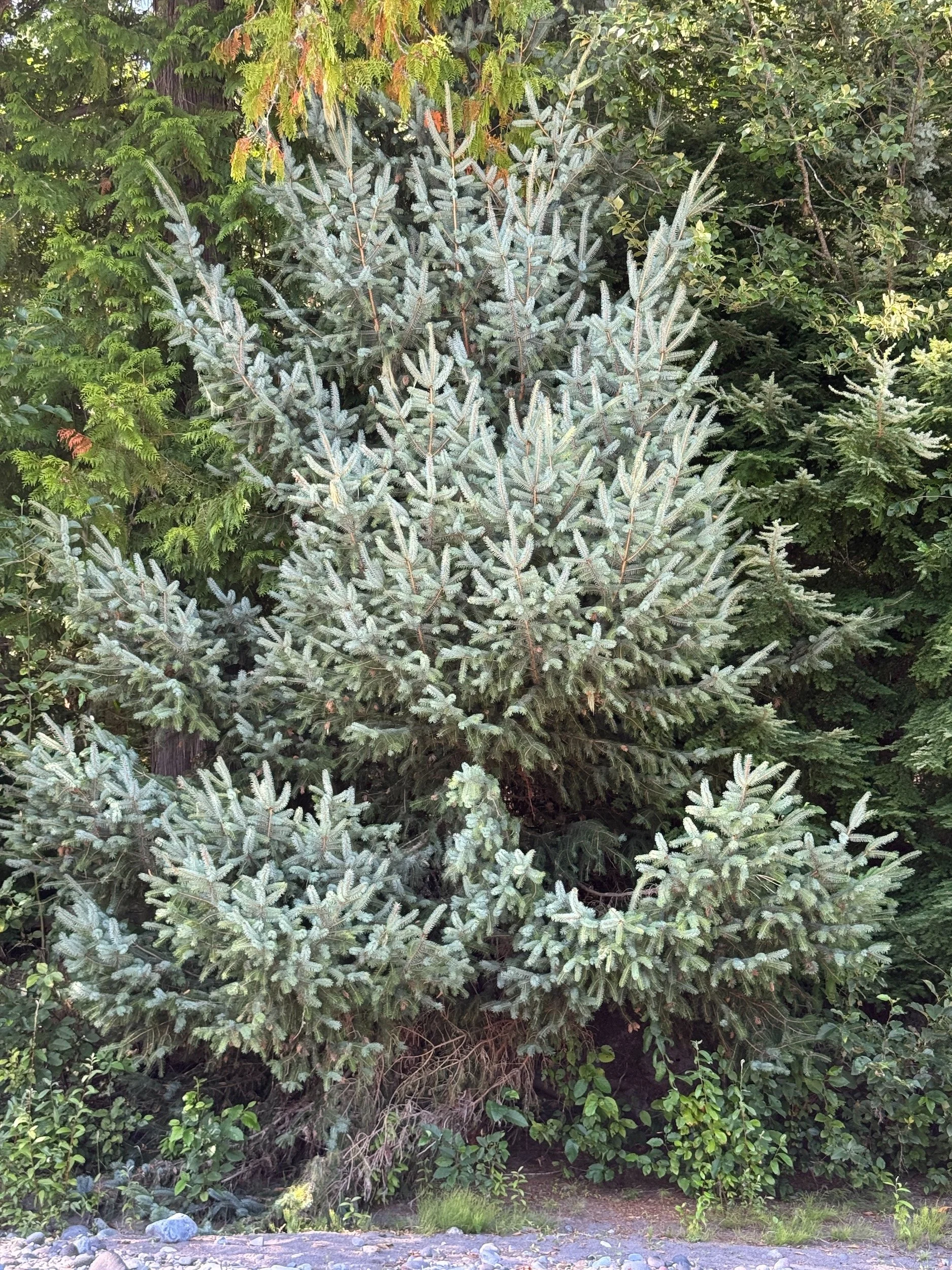
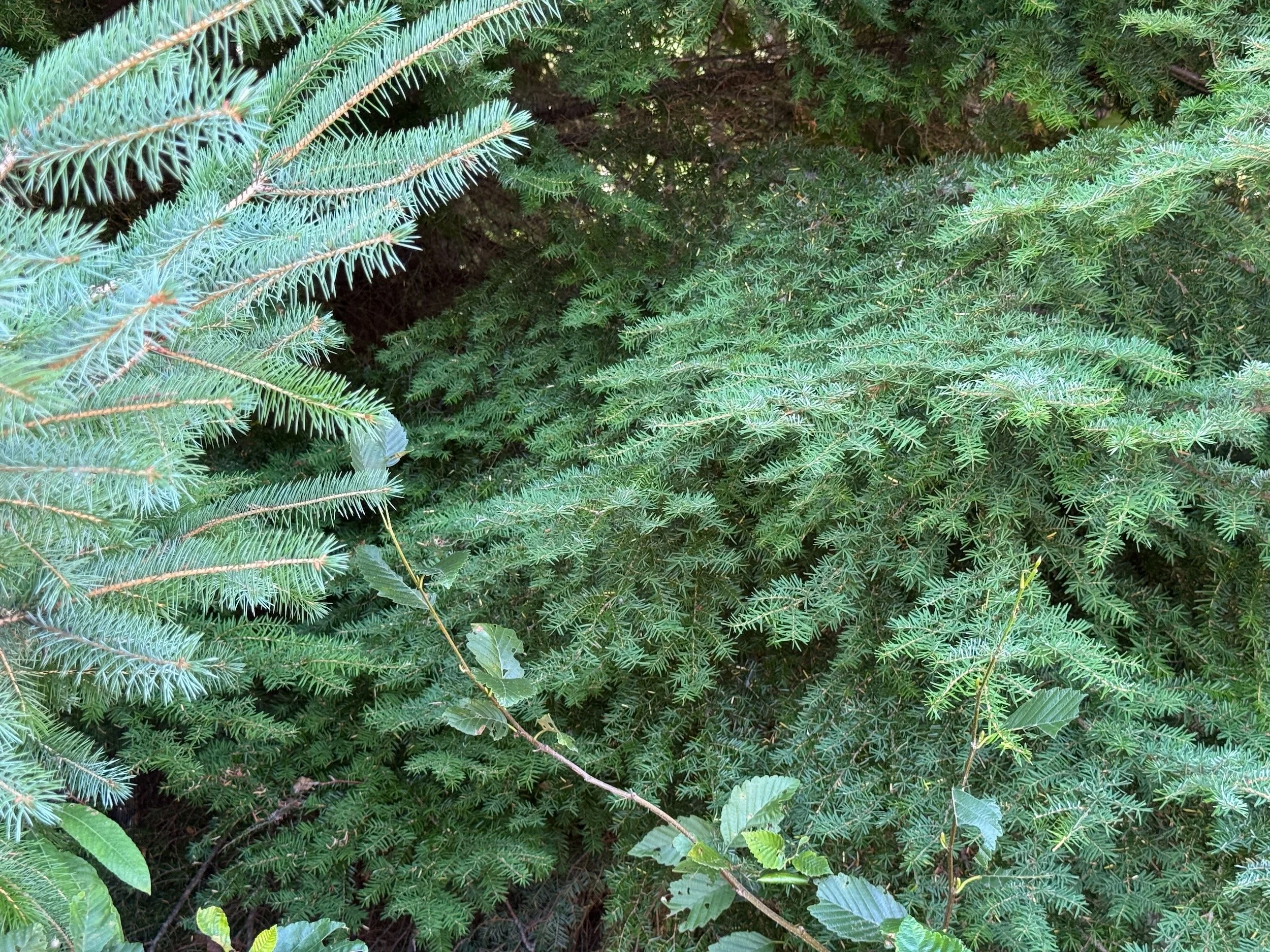
Then, on the bank, I found a tree I had expected might be there, though it was not a specific goal for the stop: Sitka spruce, Picea sitchensis. The species is most familiar near the coast, but cool, moist river valleys can carry suitable floodplain habitat inland through western Washington. The young tree was strikingly blue beside darker western hemlock and cedar. Its needles were stiff and sharp, attached singly to woody pegs. One needle rolled between my fingers rather than lying flat. The photographs caught both the whole tree and the comparison at its edge—the identification not as a label imposed afterward, but as a sequence of observations made in place.
In one afternoon we had moved from silver-fir forest to yellow-cedar ledges and subalpine firs, then down to redcedar, grand fir, cottonwood, alder, and spruce beside a glacial river. The outing’s pleasure was not simply the number of trees. It was watching each species enter and leave the day’s field of view—and noticing the one western white pine that seemed willing to travel almost the whole transect with us.